

Slot bonus multipliers remain one of the most discussed elements in modern video slots, because they directly influence how large a single spin can become. As an analytical reviewer, I focus on concrete mechanics rather than marketing claims, so this article explores how multipliers are generated, how they merge, and what players can realistically hope for from them. I utilize the Gates of Olympus game to showcase every point, because its tumble mechanic and progressive multiplier system provide clear, observable examples of how these features work in real play.
Understanding the Function of Multipliers in Slot Design
Multipliers are designed to amplify the payout of any winning combination, and their placement determines the ceiling of a session. In Gates of Olympus the multiplier appears as a floating symbol that lands on any reel and holds a value between 2× and 500×. When multiple multipliers arrive on the same tumble sequence, their values combine before being implemented to the subsequent cascade. This additive structure varies from games that multiply the multipliers themselves, and the distinction is important because additive growth produces more frequent but smaller spikes, whereas multiplicative growth creates rarer but larger spikes.
Players should therefore consider the presence of multipliers as a structural variable rather than a simple bonus. Consulting the paytable before spinning shows whether the multiplier symbol is confined to certain reels or can appear anywhere. In Gates of Olympus the symbol is unrestricted, which raises the probability of early triggers but also spreads the multiplier values across more positions, balancing the average boost per spin.
The way Gates of Olympus Develops Its Multiplier System
The game employs a 6-reel, 5-row grid with a scatter-pays mechanic rather than traditional paylines. Any eight or more matching symbols anywhere on the grid form a win, after which the symbols vanish and new ones fall into place. This tumble sequence continues until no new winning combinations appear. The multiplier symbol participates in this loop by staying on the grid and boosting its total value each time another multiplier appears during the same tumble chain.
Because the multiplier carries over across cascades, a single base-game spin can gather several hundred times the stake without entering a separate bonus round. The design choice lowers the need for frequent free-spin triggers while still offering the high-volatility experience that many players seek. Observing the meter at the top of the screen displays the current multiplier total, allowing a player to choose whether to boost the bet or decrease it based on the running total.
Scatter Symbols and Free-Spin Entry
Free spins are awarded when a minimum of four Zeus scatter symbols show up. Each scatter has its own multiplier value that is added to the global multiplier before the bonus commences. Consequently, beginning the free-spin round with an already elevated multiplier creates a higher baseline for every cascade that comes after. The free-spin count itself is set at fifteen spins, but retriggers can lengthen the round when extra scatters emerge.
During free spins the identical tumble-and-multiplier rules hold, yet the frequency of multiplier symbols grows. This adjustment compensates for the limited number of spins and boosts the chance of achieving the upper end of the multiplier range. Players who track the average multiplier value across several free-spin rounds can calculate whether the bonus round from a statistical standpoint outperforms the base game on a per-spin basis.
Multiplier Amounts and Their Distribution
The multiplier symbol can present 2×, 3×, 4×, 5×, 10×, 15×, 20×, 25×, 50×, 100×, 250×, or 500×. The distribution of these values is not uniform; smaller values occur more regularly, while 100× and above occur at reduced probabilities. Because the values sum rather than increase exponentially, attaining a total of 100× demands multiple high-value symbols or a lengthy tumble sequence. This additive model maintains the distribution of outcomes more even than a multiplicative model would permit.
Comprehending the allocation helps set achievable expectations. A player who observes frequent 2× and 3× symbols but infrequent 100× symbols can expect that most wins will obtain modest boosts, with sporadic larger jumps when several medium values combine. The paytable lists the theoretical frequency brackets, and checking those brackets before adjusting bet size avoids overrating the probability of extreme outcomes.
Volatility, RTP, and Stake Range Aspects

Gates of Olympus shows an RTP of 96.50 % in its default configuration, although some operators offer a 94.50 % version. The discrepancy of two percentage points turns into a quantifiable long-term cost, so verifying the active RTP on the information screen is a necessary first step. Volatility is rated high, meaning that a large portion of the return is centered in infrequent but large multiplier-driven wins rather than consistent small payouts.
Bet sizes extend from 0.20 to 100.00 per spin in most implementations, with the maximum win capped at 5,000× the stake. Because the multiplier can in theory climb beyond 500× when several symbols combine, the 5,000× ceiling functions as a hard stop that prevents theoretically unlimited growth. Players who pursue the upper limit should note that the probability of achieving 5,000× is extremely low and should set their bets suitably to avoid rapid bankroll depletion during dry spells.
Useful Steps to Confirm Game Settings
Before committing funds, access the game’s information panel and document three values: the displayed RTP, the maximum win multiplier, and the minimum bet increment. These numbers permit direct comparison with other high-volatility slots that also boast large multipliers. If the RTP is the lower 94.50 % variant, the long-term cost per 1,000 spins grows noticeably, and modifying session length or bet size can counteract that difference.
Next, enable the autoplay function with a loss limit amounting to fifty times the base bet. This limit offers enough spins to witness at least one full cycle of base game and free spins while capping exposure. During the session, observe the average multiplier value at the end of each winning tumble sequence. Over twenty spins the gathered data indicates whether the observed multiplier frequency corresponds with the theoretical distribution listed in the paytable.
Core Multiplier Mechanics for Gates of Olympus
Understanding how the multiplier system works with the tumble mechanic needs a closer look at the specific principles that govern symbol behavior. The following list summarizes the core interactions that determine when and how the multiplier grows during play.
- Multiplier symbols persist on the grid after each tumble and gather their figures until the sequence concludes.
- Each new multiplier symbol appends its displayed number to the running sum rather than multiplying the existing total.
- The meter zeroes only when a new paid spin begins, maintaining the additive total for the duration of a single tumble chain.
- Scatter symbols that initiate free spins also supply their individual multiplier amounts before the bonus round starts.
- During free spins the occurrence of multiplier symbols increases, enhancing the chance of reaching higher sums within the fixed spin count.
Applied Session Management Principles
Successful bankroll management in high-volatility multiplier slots relies on structured observation rather than reactive betting. The following steps below describe a consistent process for gathering data and changing stakes based on observed multiplier behavior.
- Note the active RTP displayed in the information panel before the first spin.
- Define an autoplay loss limit equal to fifty times the chosen base bet to ensure enough sample size.
- Follow the final multiplier value at the end of every winning tumble sequence for at least twenty spins.
- Compare the collected average against the paytable distribution to determine whether results match theoretical expectations.
- Change bet size only when the observed data supports a change, maintaining the same loss limit for the new stake level.
Widespread Misconceptions Regarding Bonus Multipliers
A common misconception holds that landing a high-value multiplier early guarantees a large payout. In truth the multiplier only scales existing wins, so a 100× symbol on a spin with no winning combinations produces no return. A further misconception suggests that free spins invariably outperform the base game due to elevated multiplier frequency. Although the frequency certainly rises, the fixed number of spins and the absence of an accumulating meter between spins might produce lower average returns per spin when no retrigger occurs.
A third misconception relates to the maximum win. The 5,000× cap is a hard limit, yet reaching it demands both a long tumble sequence and several high-value multipliers. The probability of fulfilling both conditions simultaneously is so low that the cap functions more as a regulatory ceiling than a realistic target. Understanding these constraints discourages over-allocation of bankroll seeking an outcome that the rules make statistically remote.
Comparing Multiplier Mechanics Throughout Popular Titles
Numerous high-volatility slots utilize multipliers, however the implementation varies enough to change session dynamics. In some games the multiplier works only during free spins and restarts after each spin, producing isolated spikes. In others the multiplier persists between spins but cannot exceed a fixed ceiling. Gates of Olympus lies between these extremes by allowing the multiplier to increase across cascades within a single spin while clearing at the start of the next paid spin.
The reset rule prevents indefinite escalation yet compensates extended tumble sequences. Players who enjoy steady accumulation may favor titles where the multiplier continues across spins, but those who appreciate the possibility of a single-spin windfall may consider the cascade-based model more engaging. Analyzing the reset conditions across three or four games offers a clearer picture of which multiplier system suits individual risk tolerance.
Assessing Trade-offs Between Frequency and Size
A multiplier that occurs often but has low values produces many moderate boosts, flattening the payout curve. In contrast, a multiplier that occurs rarely but carries high values creates fewer yet larger boosts, raising variance. Gates of Olympus equalizes these approaches by providing a wide value range and an additive total, so both frequent small multipliers and occasional large ones add to the same running meter.
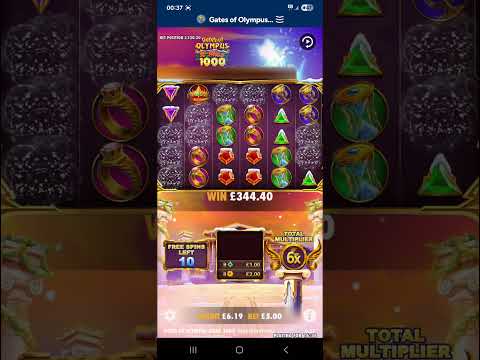
The trade-off surfaces most clearly during short sessions. A player with only fifty spins may encounter several 2× or 3× symbols without ever attaining a 50× total, resulting in modest returns. Increasing the session length increases the chance of achieving a longer tumble sequence that merges multiple medium values into a higher total. Setting a minimum spin count before assessing results assists separate normal variance from structural characteristics of the multiplier system.
FAQ
What is the RTP of Gates of Olympus?
The default return-to-player figure is 96.50 percent, though some sites offer a 94.50 percent version. The current RTP shows up in the information panel, and confirming it before play avoids unexpected discrepancies in long-term cost. Two percentage points can look small, yet over thousands of spins the gap grows measurable in absolute currency.
How many paylines are used by the game?
Gates of Olympus does not use paylines. Instead, eight or more matching symbols anywhere on the 6×5 grid create a win. This scatter-pays system permits winning combinations to form in any position, raising the number of possible outcomes per spin relative to fixed-line slots.
What initiates the free-spin round?
Four or more Zeus scatter symbols landing in a single base-game spin give fifteen free spins. Each scatter also adds its multiplier value to the global total before the bonus begins. Additional scatters during free spins provide five more spins and further boost the running multiplier.
Is it possible for the multiplier surpass 500× in one symbol?
Individual multiplier symbols peak at 500×. However, multiple symbols can land during the same tumble sequence, and their values add together. Therefore the displayed total may exceed 500× even though no single symbol holds a higher denomination.
What exactly is the maximum win cap?
The game limits any single round at 5,000 times the stake gatesofolympus-demo.com. This ceiling applies across both base game and free spins, preventing theoretically unlimited growth when multipliers accumulate over extended cascades.
In what way does volatility affect session length?
High volatility concentrates returns in infrequent but sizable wins. Short sessions may end with minimal returns, while longer sessions increase the chance of capturing a high-multiplier tumble sequence. Setting loss limits and minimum spin counts assists manage variance.
Does the multiplier reset after every paid spin?
Yes. The running multiplier total restarts at the start of each new paid spin. Only within a single spin’s tumble sequence does the multiplier continue to grow, enabling one spin to produce multiple escalating wins before the next wager begins.
After examining the additive multiplier model, the scatter-pays grid, and the documented caps, the clearest takeaway is that Gates of Olympus compensates disciplined observation over impulsive betting. Record the active RTP, note the average multiplier across twenty spins, and adjust bet size only when the collected data supports a change. This measured approach turns the game’s transparent mechanics into a practical edge for any player willing to track results rather than chase single outcomes.